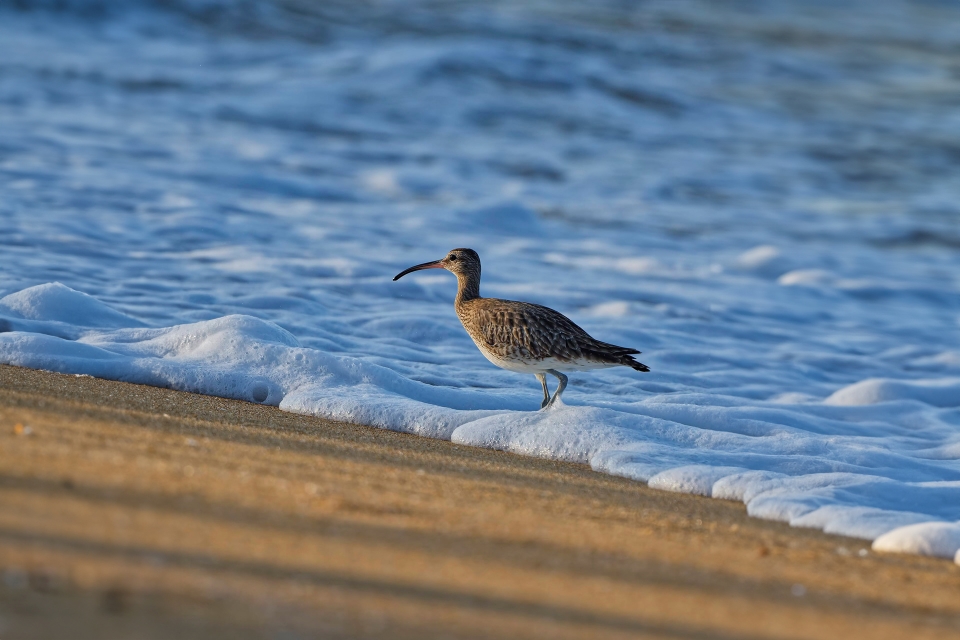
Early mornings, binoculars, and a local birder by your side.
Kasaragod is a quiet corner of Kerala for birding, and a rich one: over 400 species have been recorded here. Between the sea, the backwaters and the Western Ghats, you can go from terns on the shore to hornbills in the hills. We arrange guided bird walks for our guests with two local birders.
Bird watching near Aavi at a glance
- Guides: two local birders, architects by profession. Tell us early and we will book them.
- Where: the beach and estuaries, the Valiyaparamba and Kavvayi backwaters, the wetlands near Kanhangad, and the Ranipuram hills.
- When: September to May. Winter migrants from about October to March; the monsoon (June to August) is the hardest time.
- How to book: ask Manoj, who answers our booking line, or anyone on our team, before you arrive or after you check in. We arrange the transport.
- Species: over 400 recorded in Kasaragod district.
Where we go
Your guide plans each walk around the season and what you would most like to see. These are the places around Aavi that birders love.
The coast and the estuaries
The White-bellied Sea Eagle hunts along this coast and nests close by: a 2026 count found 17 nests across Kannur and Kasaragod, ten of them in Kasaragod, mostly in old trees in temple compounds. On the sand and at the river mouths, look for terns, gulls and waders, especially in the winter months.
The backwaters and wetlands
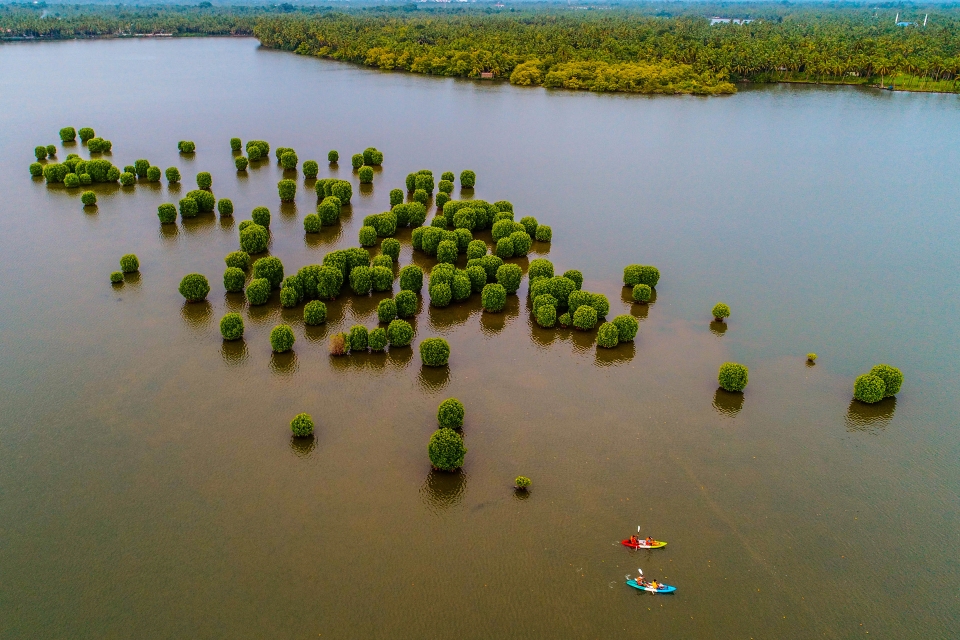
The Valiyaparamba backwaters, about 10 km south of Nileshwar, are lined with mangroves, and nearly 90 species of resident and migratory birds have been noted there. Further south, Kavvayi is the largest wetland in North Kerala. Near Kanhangad, the Chemmattamvayal wetlands are a quieter find: one study recorded 145 species there, 42 of them winter migrants, among them the Small Pratincole and the Gull-billed Tern, along with the Black-headed Ibis, the Oriental Darter and the Woolly-necked Stork, all three listed as Near Threatened. See our backwaters guide to pair a bird walk with a kayak trip.
The Ranipuram hills

Up in the Western Ghats, about 52 km from Aavi (1 hour 20 minutes by road), Ranipuram's grassland, shola and evergreen forest hold a different set of birds. Kerala Tourism lists the Malabar Grey Hornbill, found only in India's Western Ghats and listed as Vulnerable, along with the Great Hornbill, trogons, wood pigeons and the Indian Paradise Flycatcher. It makes a full morning, with a light trek to the top.
When to come
Birding is good from September to May, and every month brings something different. Winter migrants arrive from about October and stay until March, and from March to May shorebirds stop on this coast again on their way north. The monsoon, June to August, is the hardest time to go out, and fewer species are about. Start early: the first hours after sunrise are the best, before the heat.
Booking a bird walk
Our two guides are keen birders and architects by profession, so their mornings need planning. Tell us when you book your stay, or ask Manoj, who answers our booking line, or anyone on our team after you arrive, and we will match a walk to your dates. We arrange the transport, and if you have binoculars, bring them.
Questions
Can Aavi arrange a guided bird walk?
Yes. We arrange bird walks with two local birders, on the coast, around the backwaters and up in the hills. They are architects by profession, so tell us early, before you arrive or as soon as you check in, and we will book them.
When is the best time for bird watching near Bekal?
September to May. Winter migrants are here from about October to March, and shorebirds pass through again from March to May on their way north. The monsoon, June to August, is the hardest time for birding.
How many bird species are found in Kasaragod?
Over 400 species have been recorded in Kasaragod district: 421 by October 2026, as reported by Onmanorama.
Where can I go bird watching near Aavi?
The beach and estuaries near Aavi, the Valiyaparamba backwaters about 10 km south of Nileshwar, the Chemmattamvayal wetlands near Kanhangad, and the Ranipuram hills in the Western Ghats, about 52 km from Aavi. Your guide picks the place by season.
Can I see the White-bellied Sea Eagle near Bekal?
It lives here. The White-bellied Sea Eagle nests in Kasaragod and Kannur, many of its nests in old trees in temple compounds, and it hunts along the coast and the backwaters.
Plan a morning with the birds.
Tell us your dates, and we will check with our guides.
A guide by the Aavi team. Distances and times are approximate. Updated November 2026.
